

Bipolar disorder and related mood disorders involve significant shifts in mood, energy, and functioning, from depressive lows to elevated or manic highs. They are lifelong but highly manageable conditions, treated with a combination of medication management, therapy, structure, and skills. At Heights Behavioral Health in Houston, adults receive outpatient mood disorder treatment through our flagship Individualized Intensive Programming, with co-occurring substance use treated at the same time.
Mood disorders are often misunderstood and frequently missed for years, sometimes mistaken for depression alone, a difficult personality, or substance use. Getting an accurate picture changes everything, because the right treatment turns an exhausting cycle into something stable and livable.
How Do You Recognize a Mood Disorder?
Mood disorders are more than ordinary ups and downs. Signs that warrant a professional assessment include:
- Periods of unusually high energy, reduced need for sleep, racing thoughts, or impulsive decisions
- Episodes of deep depression, hopelessness, or loss of function
- Mood shifts that disrupt work, relationships, or finances
- Risky behavior or spending during elevated periods
- A family history of bipolar or mood disorders
- Using alcohol or drugs to manage the highs or lows
Only a qualified clinician can diagnose a mood disorder. If any of this resonates, an assessment is the right and reassuring next step.
How Do We Treat Mood Disorders?
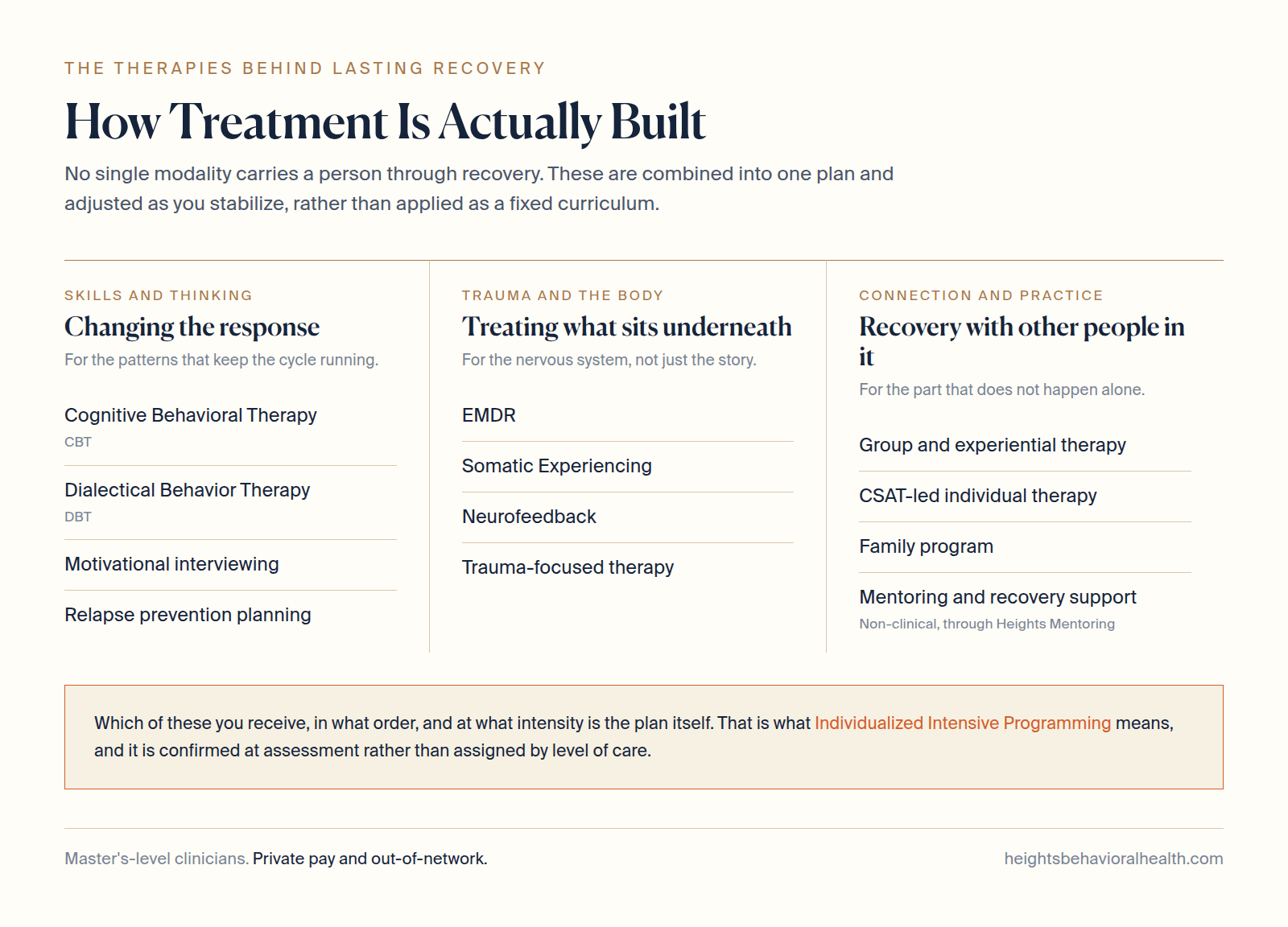
Effective treatment usually combines medication management with therapy and daily structure. Our Houston groups include skills groups in DBT, CBT, and ACT, plus Mindfulness, Guided Meditation, and routine-building work that protects sleep and stability, which are central to mood regulation. We coordinate medication management, since for bipolar disorder in particular, medication is often an essential part of staying well.
Where trauma sits underneath the mood symptoms, we treat it with EMDR and Somatic Experiencing, and our clinicians include therapists trained in Cognitive Processing Therapy. You can read more in our trauma therapy guide and our depression treatment guide.
Exhausted by mood swings you cannot predict?
One confidential call with our Houston team can help you find clarity and a path to stability.
How Are Mood Disorders and Substance Use Connected?
Substance use is extremely common with mood disorders, often as an attempt to manage the highs or lows, and it makes the cycle worse. Treating both together is essential, which is the focus of our dual diagnosis care.
Why Does a Plan Built Around Your Mood Pattern Work Better?
No two people experience a mood disorder the same way. Our flagship Individualized Intensive Programming builds the plan around your pattern, your triggers, and your goals, at PHP or IOP intensity.
What Situations Call for More Than Outpatient Mood Care?
Acute mania, severe depression, or any safety crisis needs a higher level of care first, and we will say so and help you find it. For non-clinical support, our sister practice Heights Mentoring may be a fit.
Heights Behavioral Health is a private-pay, out-of-network provider, and we are clear about pricing before you commit to anything. See how cost and out-of-network benefits work.
If this is an emergency or you are thinking about harming yourself, call 911, or call or text 988 to reach the Suicide and Crisis Lifeline. In Harris County, The Harris Center operates a 24-hour crisis line at 713-970-7000. Heights Behavioral Health is an outpatient program and is not a 24-hour crisis service.
Frequently Asked Questions
Can bipolar disorder be treated outpatient?
Many people with stable bipolar disorder do well in outpatient care that combines medication management, therapy, and structure. Acute mania or severe episodes may need a higher level of care first, which we help arrange.
Is medication required for bipolar disorder?
For bipolar disorder, medication is often an essential part of staying well, alongside therapy and lifestyle structure. The specific plan is always made with you and your prescriber.
Do you take insurance?
We are private pay and out of network, so we are not contracted with insurance plans. We explain what an assessment and the recommended level of care cost before you commit, including psychiatric coordination. Superbills are available if your plan has out-of-network benefits.
How is a mood disorder diagnosed?
Through a careful clinical assessment that looks at your history, symptoms, and patterns over time. An accurate diagnosis is the foundation of effective treatment.
What if I use alcohol or drugs to cope with my moods?
That is common, and it makes mood disorders harder to manage. We treat the substance use and the mood disorder together through our dual diagnosis care.
Stability Is Possible With the Right Care
Mood disorders are manageable, and the right treatment makes daily life steadier. One confidential call is the first step.
Sources
Start a Confidential Conversation
One confidential message connects you with our admissions team and a clear next step. Prefer to talk now? Call (877) 549-5102.