



Key Takeaways
- Trauma is not a character flaw but a nervous system that learned to protect you and never got the signal that the danger passed, and good treatment helps deliver that signal safely.
- Signs of trauma and PTSD include flashbacks or nightmares, avoidance of reminders, feeling on edge, numbness, guilt, or shame, and using alcohol or drugs to quiet the symptoms.
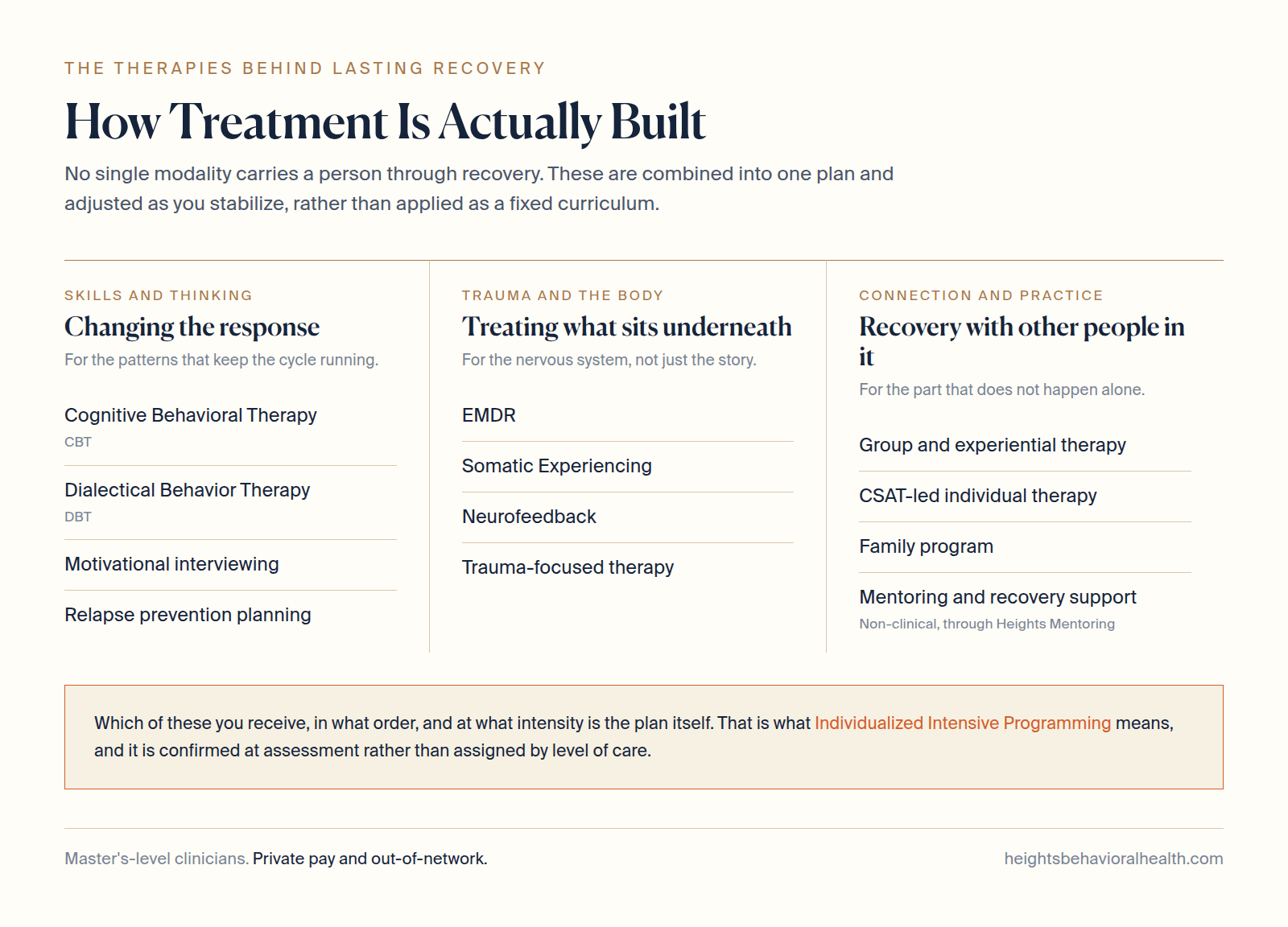
- Evidence-based options include EMDR for reprocessing traumatic memories, CPT for shifting stuck beliefs like pervasive guilt, and Somatic Experiencing for releasing stress responses held in the body.
- When substances are used to manage trauma symptoms, treating the substance use alone tends to fail, so trauma work and substance use care are coordinated in the same plan.
- Safe trauma treatment builds grounding and coping skills before deep processing, moves at a pace you can handle, and starts with a clinical assessment to determine the right starting point.
Trauma therapy uses evidence-based approaches, including EMDR, Cognitive Processing Therapy (CPT), and Somatic Experiencing, to help adults process traumatic experiences and reduce symptoms such as flashbacks, hypervigilance, avoidance, and emotional numbness. At Heights Behavioral Health, trauma care is delivered in an outpatient setting, paced carefully, and coordinated with treatment for any co-occurring substance use, because trauma and substance use so often travel together. To see how this works in practice, read about our trauma therapy in Houston.
People reach this page two ways. Either you know trauma is affecting your life and you want real treatment for it, or you have noticed that drinking or using tracks with trauma symptoms. Both come down to one question: what actually helps trauma heal, and how is it treated safely?
After more than 37 years of clinical work, most of it here in Houston, here is my honest answer. Trauma is not a character flaw or something to push through. It is a nervous system that learned to protect you and never got the signal that the danger passed. Good trauma treatment helps deliver that signal, at a pace that keeps you safe. This guide explains the main approaches and how care works here.
This article is an educational overview of trauma treatment options. For the treatments themselves, see our EMDR therapy and Cognitive Processing Therapy (CPT) service pages.
How Do You Recognize Trauma and PTSD?
- Re-experiencing. Flashbacks, nightmares, or intrusive memories that pull you back into the event.
- Avoidance. Steering clear of people, places, or feelings that are reminders.
- Hyperarousal. Feeling on edge, easily startled, irritable, or unable to relax.
- Mood and thinking changes. Numbness, guilt, shame, or a bleak view of yourself and the world.
- Self-medication. Using alcohol or drugs to quiet the symptoms, a common link to dual diagnosis.
What Are the Evidence-Based Trauma Therapies?
- EMDR (Eye Movement Desensitization and Reprocessing). Uses guided bilateral stimulation to help the brain reprocess traumatic memories so they lose their charge.
- Cognitive Processing Therapy (CPT). Helps you identify and shift the stuck beliefs trauma installs, such as pervasive guilt or mistrust.
- Somatic Experiencing. Works with the body’s stored stress responses to release them safely, useful when trauma lives more in the body than in words.
- Skills and stabilization first. Before deep processing, treatment builds grounding and coping skills so the work stays tolerable.
Confidential Next Step
Wondering if trauma is driving the rest?
A confidential assessment can clarify what is going on and what trauma-focused outpatient care would look like for you.
Why Are Trauma and Substance Use Treated Together?
When people use substances to manage trauma symptoms, treating the substance use alone tends to fail, because the trauma keeps generating the symptoms that drive use. We treat both together. Trauma work is coordinated with substance use care in the same plan, at the level of care that fits, from IOP to our flagship Individualized Intensive Programming, where trauma is paced carefully rather than rushed.
How Do You Get Started Safely?
Trauma treatment should never feel like being thrown back into the worst moment. Good care builds safety and skills first, then processes at a pace you can handle. A clinical assessment determines the right starting point. If a loved one needs non-clinical support rather than treatment, our sister practice Heights Mentoring may help as a first step.
Heights Behavioral Health is a private-pay, out-of-network provider, and we are clear about pricing before you commit to anything. See how cost and out-of-network benefits work.
If this is an emergency or you are thinking about harming yourself, call 911, or call or text 988 to reach the Suicide and Crisis Lifeline. In Harris County, The Harris Center operates a 24-hour crisis line at 713-970-7000. Heights Behavioral Health is an outpatient program and is not a 24-hour crisis service.
Two closer looks worth reading next: what cognitive processing therapy looks like, session by session, and why PTSD and alcohol so often travel together.
Frequently Asked Questions
What therapies treat trauma and PTSD?
Evidence-based options include EMDR, Cognitive Processing Therapy (CPT), and Somatic Experiencing, usually preceded by skills and stabilization work. The right mix depends on the person.
Can trauma be treated in an outpatient program?
Yes. Many adults receive effective trauma treatment in outpatient care while living at home. Care is paced carefully, and a higher level of care is recommended when symptoms are severe or safety is a concern.
Do you take insurance for trauma treatment?
We are private pay and out of network, and not contracted with insurance plans. Trauma treatment is quoted as a course of care, so you know the commitment before you begin. Superbills are available if your plan has out-of-network benefits.
Why treat trauma and substance use at the same time?
When substances are used to manage trauma symptoms, treating only the substance use tends to fail. Integrated care addresses both, so the trauma stops driving the use.
Will trauma treatment make me relive the worst moment?
Good treatment avoids that. It builds safety and coping skills first, then processes memories at a pace you can tolerate, with a clinician guiding the work.
Treat the Root, Not Just the Symptoms
If trauma is shaping your life or your substance use, one confidential call will help you understand your options and what trauma-focused care looks like here.
Sources
- U.S. Department of Veterans Affairs, National Center for PTSD. Treatments for PTSD: EMDR and CPT. ptsd.va.gov
- National Institute of Mental Health (NIMH). Post-Traumatic Stress Disorder. nimh.nih.gov
- Substance Abuse and Mental Health Services Administration (SAMHSA). Trauma-Informed Care and Co-Occurring Disorders. samhsa.gov
Written and Reviewed by Licensed Clinicians
Joni Ogle is a Licensed Clinical Social Worker (LCSW) and Certified Sex Addiction Therapist (CSAT) with over 37 years of clinical experience in mental health and addiction recovery, dual diagnosis treatment, behavioral addictions, and family intervention. She is the founder of Heights Behavioral Health and Heights Mentoring in Houston, Texas, where she leads a team of licensed clinicians.
Texas LCSW #37376 · Verify license
Deborah Darnell-Drake, LCSW-S, ACSW, LMFT is the Chief Clinical Officer at Heights Behavioral Health and a clinical reviewer. With more than five decades of experience in mental health and substance use disorder treatment, Deborah specializes in addiction, co-occurring mental health conditions, family dynamics, and behavioral addictions including gambling and technology addiction.
Texas LCSW-S #14508 · LMFT #1125 · Verify license
Start a Confidential Conversation
One confidential message connects you with our admissions team and a clear next step. Prefer to talk now? Call (877) 549-5102.