




Key Takeaways
- Postpartum depression and anxiety are common, treatable complications of childbirth, and having them says nothing about whether you love your baby or are capable of caring for one.
- The baby blues resolve on their own within roughly the first two weeks, while postpartum depression lasts longer, feels heavier, interferes with functioning, and can begin during pregnancy or months later.
- Postpartum anxiety can bring racing thoughts, compulsive checking, physical symptoms, and intrusive thoughts about harm to the baby, which are distressing but not the same as wanting to act on them.
- Thoughts of harming yourself or your baby, and signs of postpartum psychosis such as confusion, paranoia, or hearing or seeing things, need emergency attention rather than a scheduled appointment.
- Outpatient treatment can combine individual therapy, skills for anxiety and intrusive thoughts, and trauma work, coordinated with your OB or prescriber, with integrated care if alcohol is also part of the picture.
Postpartum depression and anxiety are among the most common complications of childbirth and among the least likely to be named out loud. The reason is not ignorance. It is that a new mother who says she feels nothing, or feels terrified, or wants to disappear, is afraid of what people will conclude about her. So she says she is tired. For what outpatient care involves, see our depression treatment in Houston page.
These conditions are common, they are treatable, and having them says nothing about whether you love your baby or are capable of caring for one.
Baby Blues, or Something More
Roughly the first two weeks after delivery bring mood swings, tearfulness, and irritability for a large share of new mothers. That is the baby blues, and it resolves on its own. Postpartum depression lasts longer, feels heavier, and interferes with functioning. It can begin during pregnancy or emerge months after delivery, not only in the first weeks.
What Postpartum Depression Looks Like
- Persistent sadness, emptiness, or a flatness where feeling should be
- Difficulty bonding with the baby, or feeling like you are performing motherhood rather than living it
- Withdrawing from people who want to help
- Sleeping poorly even when the baby sleeps, or sleeping to escape
- Appetite changes, exhaustion beyond what the schedule explains
- Feeling worthless, or convinced your family would be better off without you
- Intense guilt about any of the above
What Postpartum Anxiety Looks Like
Less discussed and equally common. Racing thoughts that will not stop, a constant sense that something terrible is about to happen, compulsive checking that the baby is breathing, physical symptoms like a pounding heart or nausea, and an inability to rest even when someone else is watching the baby. Intrusive thoughts about harm coming to the baby are frequent and deeply distressing, and having them is not the same as wanting to act on them.
What Is Urgent
Two things need immediate attention rather than a scheduled appointment. Thoughts of harming yourself or your baby, and postpartum psychosis, which is rare but a medical emergency: confusion, paranoia, hearing or seeing things others do not, or beliefs that are out of touch with reality. If any of that is present, call 911 or go to an emergency room now. Call or text 988 for immediate mental health support.
Confidential Mental Health Care
Not sure if what you are feeling is normal?
A confidential assessment can tell you, without judgment and without assumptions about your parenting.
Why So Many Women Do Not Ask for Help
The fear underneath most silence is that admitting to these feelings will be treated as evidence of unfitness. That fear is understandable and it keeps treatable illness untreated for months. Seeking help is the opposite of what it feels like: it is the action of someone taking their child seriously.
What Treatment Looks Like Here
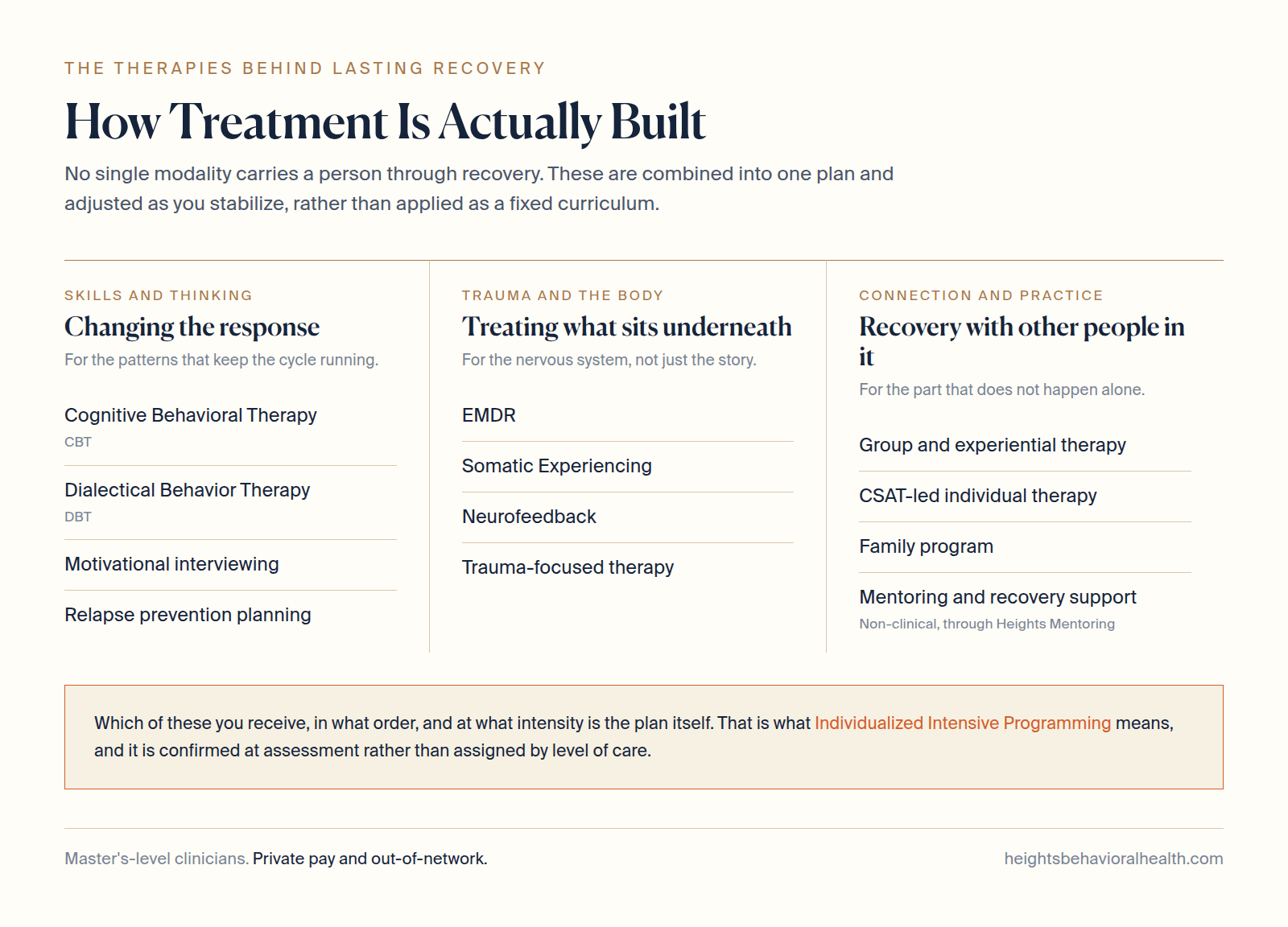
We are an adult outpatient behavioral health program. Treatment typically combines individual therapy, skills for the anxiety and intrusive thoughts, and trauma work where a difficult birth or prior loss is part of the picture, using EMDR, CPT, or Somatic Experiencing. We coordinate with your OB, midwife, or prescriber rather than working around them, and medication decisions stay with your prescriber, including questions about breastfeeding. Our depression and anxiety articles cover the general clinical picture.
The Scheduling Problem Nobody Solves
Treatment that assumes you have childcare is treatment you cannot attend. Our Individualized Intensive Program is built around the individual rather than a fixed track, and our IOP includes three-day and evening options. Tell us what your week actually looks like and we will tell you honestly whether we can work with it.
When Substance Use Is Also Part of It
Alcohol is a common way to manage postpartum anxiety and sleeplessness, and it is rarely mentioned at the pediatrician’s office. If that is part of your picture, treating both together works better than addressing one and hoping the other resolves. See our dual diagnosis and depression and alcohol articles.
If this is an emergency or you are thinking about harming yourself, call 911, or call or text 988 to reach the Suicide and Crisis Lifeline. In Harris County, The Harris Center operates a 24-hour crisis line at 713-970-7000. Heights Behavioral Health is an outpatient program and is not a 24-hour crisis service.
Frequently Asked Questions
How common is postpartum depression?
It is one of the most common complications of childbirth, affecting a substantial minority of new mothers. Postpartum anxiety is similarly common and less often discussed.
How long after birth can it start?
It can begin during pregnancy or appear months after delivery. It is not limited to the first few weeks, which is one reason it gets missed.
Do you take insurance?
We are private pay and out of network, and not in network with any plan. New parents deserve a clear number rather than a surprise, so pricing is explained before anything starts. If your plan has out-of-network benefits, we provide a superbill you can submit.
Are intrusive thoughts about the baby dangerous?
Distressing intrusive thoughts about harm coming to the baby are common in postpartum anxiety and are not the same as wanting to act on them. They are treatable. Thoughts of intentionally harming yourself or your baby, or symptoms of postpartum psychosis, require immediate emergency care.
Will asking for help affect custody of my child?
Seeking treatment for a common, treatable condition is not evidence of unfitness. This fear keeps many women from care they need. If you have specific legal concerns, speak with an attorney, but do not let the fear go unaddressed.
Can I get treatment if I am breastfeeding?
Yes. Therapy does not interfere with breastfeeding, and medication questions are decided with your prescriber, who can weigh options compatible with nursing.
You Are Not Failing, and This Is Treatable
A confidential assessment with clinicians who will not assume the worst about you.
Sources
Written and Reviewed by Licensed Clinicians
Joni Ogle is a Licensed Clinical Social Worker (LCSW) and Certified Sex Addiction Therapist (CSAT) with over 37 years of clinical experience in mental health and addiction recovery, dual diagnosis treatment, behavioral addictions, and family intervention. She is the founder of Heights Behavioral Health and Heights Mentoring in Houston, Texas, where she leads a team of licensed clinicians.
Texas LCSW #37376 · Verify license
Deborah Darnell-Drake, LCSW-S, ACSW, LMFT is the Chief Clinical Officer at Heights Behavioral Health and a clinical reviewer. With more than five decades of experience in mental health and substance use disorder treatment, Deborah specializes in addiction, co-occurring mental health conditions, family dynamics, and behavioral addictions including gambling and technology addiction.
Texas LCSW-S #14508 · LMFT #1125 · Verify license
Start a Confidential Conversation
One confidential message connects you with our admissions team and a clear next step. Prefer to talk now? Call (877) 549-5102.