


Key Takeaways
- Men are considerably less likely to seek mental health treatment and more likely to die by suicide. The distress is not smaller; it presents differently and reaches a professional years later, if at all.
- Depression in men often shows up as irritability, disproportionate anger, unexplained physical complaints, relentless work, withdrawal, escalating drinking, or reckless behavior rather than visible sadness.
- Alcohol is the most socially available option for a man who cannot name what is wrong, but it worsens depression and anxiety over time, so the attempted treatment becomes part of the problem.
- Anger often carries grief, fear, shame, and hurt underneath it. Treatment that only manages anger tends to produce a quieter man rather than a well one, so the work goes deeper.
- Treatment is more concrete than many men expect: an assessment, a plan with specific targets, and skills for this week. Evening IOP fits around work, and employers are not contacted without written authorization.
Men are considerably less likely to seek mental health treatment and considerably more likely to die by suicide. Those two facts are related. The gap is not that men experience less distress; it is that the distress presents differently, gets recognized less often, and gets brought to a professional years later, if at all.
Depression Does Not Always Look Like Sadness
The clinical picture most people carry, tearfulness and visible low mood, describes some depressed men and not others. In many it shows up as irritability and a short fuse, anger that seems disproportionate, physical complaints without a clear cause, working relentlessly, withdrawing from people, escalating drinking, or reckless behavior. A man describing himself as stressed and exhausted is often describing depression in the only vocabulary available to him.
Why Men Wait
- Distress reframed as a character problem: weakness, laziness, or failure to handle it
- A working assumption that therapy means talking about childhood indefinitely
- Genuine fear about professional consequences, particularly in industries where reputation carries weight
- No language for it, having never watched another man do this
- A belief that it has to reach crisis before it counts
- Alcohol working well enough, for a while, that nothing else seems necessary
The Alcohol Route
Drinking is the most socially available option for a man who cannot name what is wrong. It is legal, sanctioned, does not require a conversation, and works immediately. It also worsens depression and anxiety over time, so the thing being used as treatment becomes part of the problem. Our depression and alcohol article covers that loop, and gray-area drinking covers the stage before it looks serious.
Anger Is Usually Downstream of Something
Anger is one of the few emotions many men were permitted, so grief, fear, shame, and hurt often arrive already converted into it. Treatment that only manages the anger and never gets to what it is carrying tends to produce a quieter man rather than a well one. Our group programming includes anger awareness and shame resilience for this reason. See group therapy.
The Suicide Statistic Worth Knowing
Men die by suicide at substantially higher rates than women, in significant part because methods used are more often lethal and because help is sought later. If you are having thoughts of ending your life, call or text 988 now. That is not an overreaction, and it is not a step you have to earn by getting worse first.
Confidential Mental Health Care
Not in crisis, and something is still off?
That is a completely legitimate reason to call.
What Treatment Actually Involves
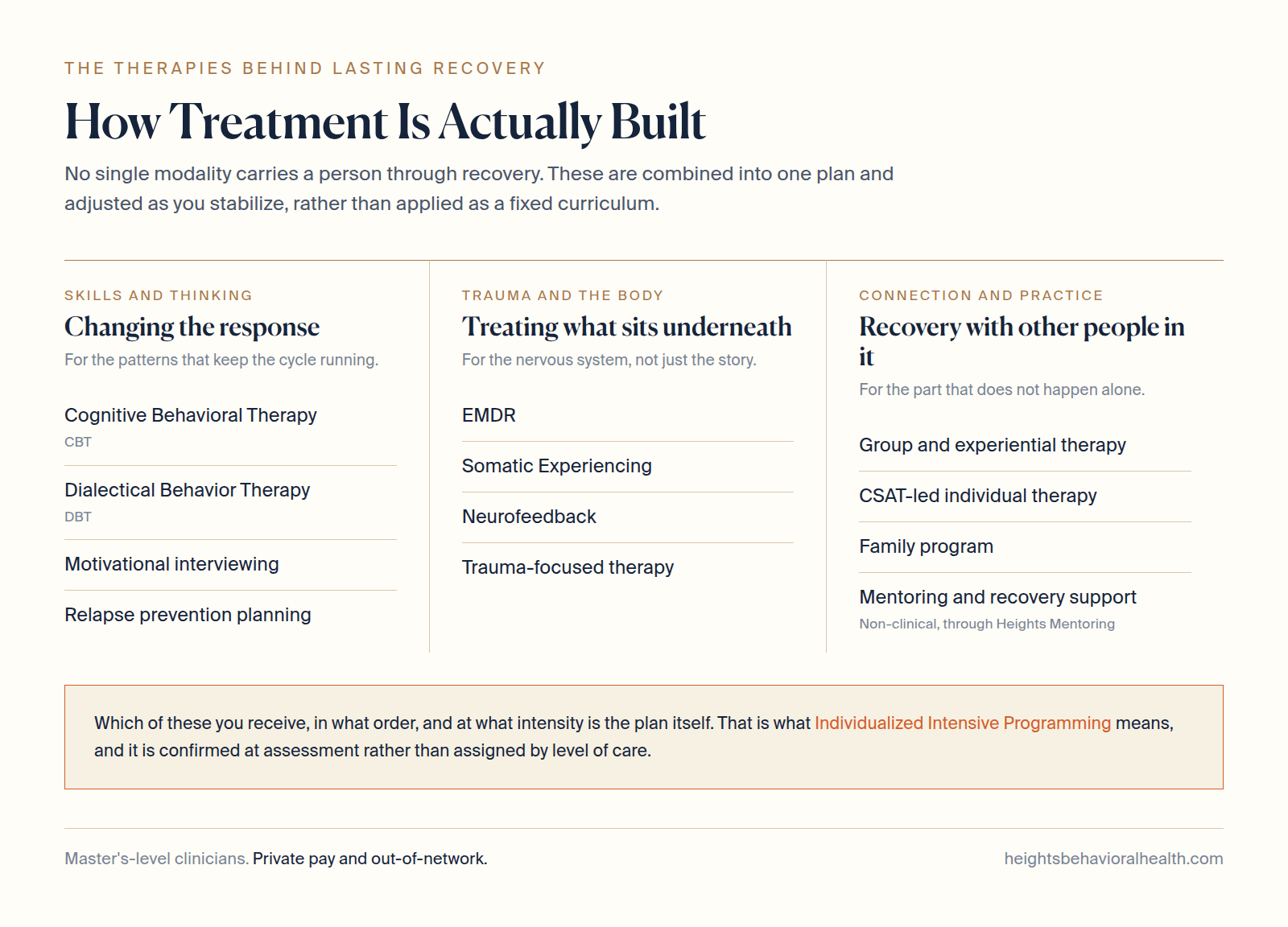
It is more concrete than most men expect. An assessment of what is happening, a plan with specific targets, and skills you can use this week. Trauma work, when it applies, uses approaches like EMDR and Somatic Experiencing that require far less verbal recounting than people assume. Nobody is going to make you narrate your childhood on day one. See our trauma therapy article.
And the Job
The most common practical objection is work, and it is a real one rather than an excuse. Our Individualized Intensive Program schedules around actual obligations and our evening IOP runs after the workday. Your treatment is protected health information, and we do not contact employers without your written authorization. See high-functioning addiction.
If this is an emergency or you are thinking about harming yourself, call 911, or call or text 988 to reach the Suicide and Crisis Lifeline. In Harris County, The Harris Center operates a 24-hour crisis line at 713-970-7000. Heights Behavioral Health is an outpatient program and is not a 24-hour crisis service.
Frequently Asked Questions
Why do men avoid mental health treatment?
A mix of framing distress as personal weakness, no vocabulary or example for seeking help, fear of professional consequences, and finding alcohol available and immediately effective.
What does depression look like in men?
Frequently irritability, anger, physical complaints, overwork, withdrawal, reckless behavior, or increased drinking rather than visible sadness. It is often described as stress or exhaustion.
Do you take insurance?
We are private pay and out of network, so we are not contracted with insurance plans. We give you the number plainly and early, without a runaround. If your plan has out-of-network benefits, we provide a superbill you can submit for reimbursement.
Will I have to talk about my childhood?
Not on day one, and not ever if it is not clinically relevant. Trauma approaches like EMDR and somatic work require far less verbal recounting than most people expect.
Will my employer find out?
Not from us. Treatment is protected health information and we do not contact employers without your written authorization.
Do I need to be in crisis to get help?
No. Earlier is easier, less disruptive, and more effective. Waiting for a crisis is the most common and most costly mistake.
You Do Not Have to Be in Crisis to Call
One confidential conversation, no assumptions, and a straight answer about whether treatment would help.
Sources
Written and Reviewed by Licensed Clinicians
Joni Ogle is a Licensed Clinical Social Worker (LCSW) and Certified Sex Addiction Therapist (CSAT) with over 37 years of clinical experience in mental health and addiction recovery, dual diagnosis treatment, behavioral addictions, and family intervention. She is the founder of Heights Behavioral Health and Heights Mentoring in Houston, Texas, where she leads a team of licensed clinicians.
Texas LCSW #37376 · Verify license
Deborah Darnell-Drake, LCSW-S, ACSW, LMFT is the Chief Clinical Officer at Heights Behavioral Health and a clinical reviewer. With more than five decades of experience in mental health and substance use disorder treatment, Deborah specializes in addiction, co-occurring mental health conditions, family dynamics, and behavioral addictions including gambling and technology addiction.
Texas LCSW-S #14508 · LMFT #1125 · Verify license
Start a Confidential Conversation
One confidential message connects you with our admissions team and a clear next step. Prefer to talk now? Call (877) 549-5102.