

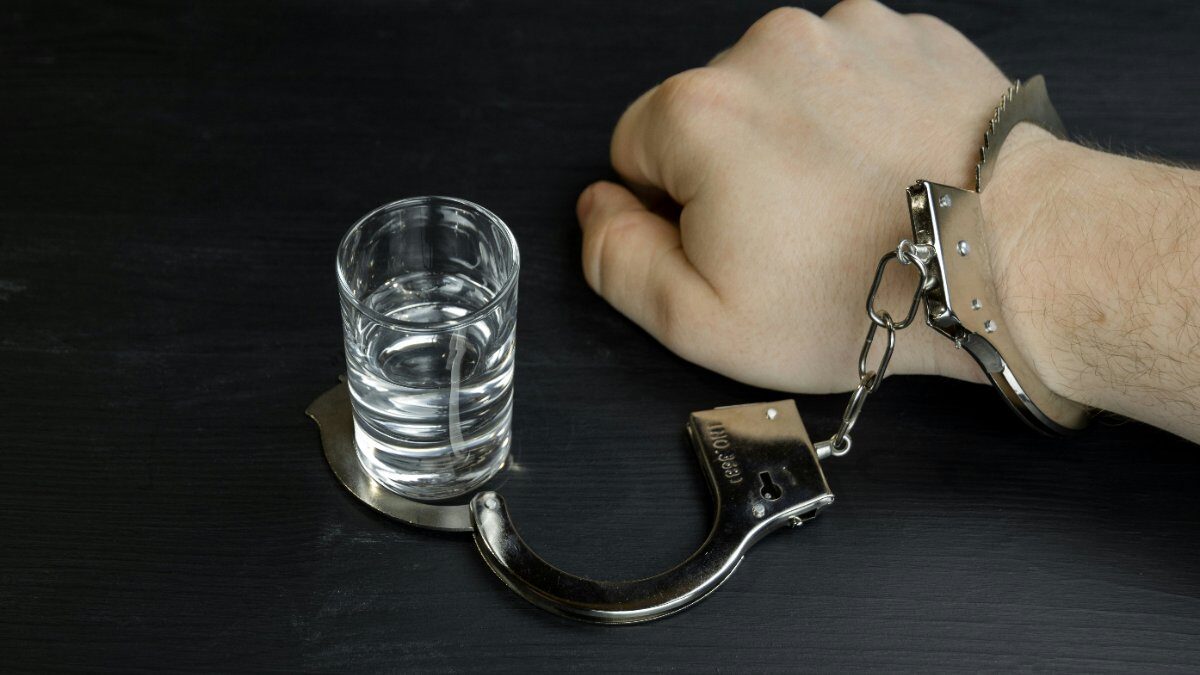
Gray-area drinking describes the space between drinking that never causes a problem and drinking that has clearly become one. Nothing has burned down. There is no DUI, no lost job, no intervention. There is a private, persistent sense that alcohol occupies more room in your life than you would like, and a suspicion that saying so out loud would be an overreaction.
It is not a diagnosis. It is a real experience, and a very large number of people are living in it.
Why “Rock Bottom” Is Bad Advice
The idea that someone has to lose everything before they can change is culturally powerful and clinically wrong. Nothing about losing a marriage or a license makes recovery more likely; those losses simply make the problem impossible to ignore. Waiting for one is waiting for damage to do the persuading. Alcohol use disorder is diagnosed on a spectrum from mild to severe, and mild is not a lesser version of a real problem, it is the easiest point to change one.
What Gray-Area Drinking Tends to Look Like
- Drinking more than you intended more often than you would admit
- Rules that keep needing to be created: only weekends, only wine, never before six
- Real relief when a plan involves alcohol, and mild dread when it does not
- Sleeping badly, waking at three or four in the morning, and blaming stress
- A layer of next-day anxiety or low-grade guilt that has become normal
- Counting other people’s drinks to locate yourself in the normal range
- Feeling like you are managing something that should not require managing
What It Is Doing Even at This Level
Alcohol disrupts sleep architecture even when you sleep long hours, which is why the tiredness does not resolve. It reliably worsens anxiety and mood over time, which most people experience as stress rather than as a consequence of drinking. Our depression and alcohol and anxiety and alcohol articles cover both loops in detail.
Nothing has gone wrong, and you are still wondering?
That question is worth an honest conversation. No pressure, no assumption.
The Experiment That Tells You Something
Take a defined break, thirty days, and pay attention to two things: how hard it is, and what your mind does. Not drinking easily is information. Constant negotiation, irritability, elaborate justifications for an exception, or arranging to be somewhere drinking is available all say more than any quiz. One caution: if you drink daily or heavily, do not stop abruptly without medical guidance, because alcohol withdrawal can be dangerous. See our alcohol use disorder article.
What Help Looks Like at This Stage
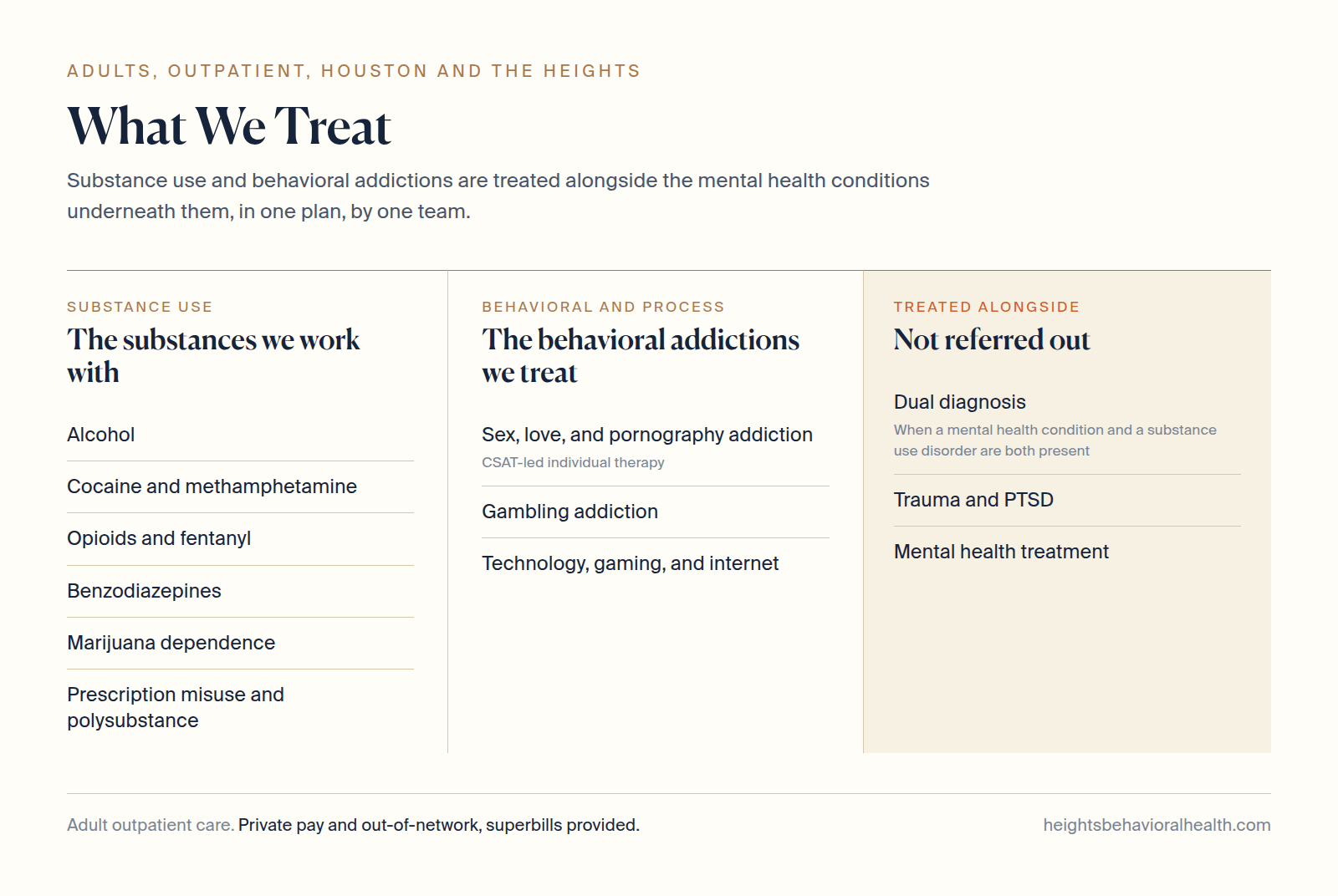
It rarely means the most intensive level of care. For many people it means an honest assessment, some individual work on what alcohol is doing for you, and skills for the situations where it is hardest. Our Individualized Intensive Program is built around the individual rather than a fixed track, and our evening IOP exists so people do not have to choose between work and getting help. If a lighter level of care is right, we will say so.
If this is an emergency or you are thinking about harming yourself, call 911, or call or text 988 to reach the Suicide and Crisis Lifeline. In Harris County, The Harris Center operates a 24-hour crisis line at 713-970-7000. Heights Behavioral Health is an outpatient program and is not a 24-hour crisis service.
Frequently Asked Questions
Is gray-area drinking a real diagnosis?
No, it is a descriptive term rather than a clinical one. Alcohol use disorder is diagnosed on a spectrum from mild to severe, and much of what people call gray-area drinking meets criteria for mild.
Do I have to hit rock bottom to get help?
No, and waiting for one is a bad idea. Earlier intervention is easier, less disruptive, and does not require you to lose anything first.
Do you take insurance?
We are private pay and out of network, so we are not contracted with insurance plans. One reason people in the gray area wait is uncertainty about cost, so we quote it plainly before you decide anything. If your plan has out-of-network benefits, we provide the superbill to submit.
How do I know if my drinking is a problem?
The useful signals are drinking more than intended, needing rules to control it, difficulty stopping for a defined period, and effects on sleep, mood, or anxiety. Comparing yourself to heavier drinkers is not a reliable test.
Is it safe to stop drinking on my own?
Not always. With daily or heavy drinking, withdrawal can be medically dangerous and can involve seizures. Get a medical assessment before stopping abruptly.
Will you push me into intensive treatment?
No. Many people at this stage need less than our most intensive programming, and we will tell you that honestly rather than recommend more than you need.
You Do Not Have to Wait for It to Get Worse
One confidential call to talk through what you are noticing and what, if anything, would help.
Sources
Start a Confidential Conversation
One confidential message connects you with our admissions team and a clear next step. Prefer to talk now? Call (877) 549-5102.