




Key Takeaways
- Alcohol use disorder is a medical condition in which drinking becomes compulsive despite harm. It ranges from mild to severe, and most people with mild to moderate AUD can be treated effectively in outpatient care.
- Signs include drinking more or longer than intended, being unable to cut down, cravings, interference with work or relationships, tolerance, and withdrawal symptoms such as shaking, sweating, anxiety, or trouble sleeping.
- Alcohol withdrawal can be medically dangerous and, in severe cases, life threatening. If you are physically dependent, the safe first step is medically supervised detox before outpatient therapy begins.
- Three medications are FDA-approved for alcohol use disorder: naltrexone, acamprosate, and disulfiram. Naltrexone reduces cravings and blunts drinking’s reinforcing effect, but it is one part of a plan, not a substitute for treatment.
- Anxiety, depression, and trauma frequently drive drinking, and drinking makes them worse. Treating both together through dual diagnosis care helps break that cycle.
Alcohol use disorder (AUD) is a medical condition in which drinking becomes compulsive and continues despite harm to health, relationships, or work. It ranges from mild to severe, and most people with mild to moderate AUD can be treated effectively in outpatient care. At Heights Behavioral Health in Houston, AUD is treated through structured outpatient programming and our flagship Individualized Intensive Programming, with medical detox coordinated first whenever it is needed.
Alcohol is so woven into daily life that problem drinking often hides in plain sight. People tell themselves they function fine, until the cost to sleep, mood, health, or relationships becomes hard to ignore. Wherever you are on that spectrum, treatment is effective and the earlier it starts, the easier recovery tends to be.
What Are the Signs of Alcohol Use Disorder?
AUD is diagnosed clinically, and severity depends on how many signs are present. Common ones include:
- Drinking more or longer than intended
- Wanting to cut down but being unable to
- Spending a lot of time drinking or recovering from it
- Cravings, or strong urges to drink
- Drinking that interferes with work, home, or relationships
- Needing more to feel the same effect, a sign of tolerance
- Withdrawal symptoms such as shaking, sweating, anxiety, or trouble sleeping
Do I Need Medical Detox First?
Alcohol withdrawal can be medically dangerous and, in severe cases, life threatening. If you are physically dependent, the safe first step is a medically supervised detox, not outpatient therapy. We assess for this on the first call, and when detox is needed we help coordinate that referral before outpatient treatment begins. Naming this clearly is part of responsible care.
How Does Outpatient Alcohol Treatment Work?
Once you are medically stable, outpatient care lets you treat AUD while living at home and keeping work or family commitments. Care combines individual therapy with group work, including Relapse Prevention, Addiction Education, and skills groups in CBT, DBT, and Motivational Interviewing, plus experiential options like Mindfulness and art therapy. Levels of care range from a partial hospitalization program (PHP) or intensive outpatient program (IOP) to step-down support, and you move down as you stabilize.
Confidential Next Step
Not sure if your drinking has crossed a line?
One confidential call with our Houston team can help you understand where you are and what level of care fits.
What Makes Individualized Programming Different for Alcohol Recovery?
Standard group-only programs treat everyone the same. Our flagship Individualized Intensive Programming builds the week around your drinking history, your triggers, and any co-occurring conditions. If you have tried generic outpatient care and it did not hold, this personalized approach is often the difference.
Can Medication Help With Alcohol Cravings?
For some people, yes. Three medications are FDA-approved for alcohol use disorder: naltrexone, acamprosate, and disulfiram. Naltrexone is the one most often used first, and it works by reducing cravings and blunting the reinforcing effect of drinking rather than by making you sick. It is not a substitute for treatment and it does not work for everyone, but for the right person it removes enough of the pull to make the rest of the work possible. We offer MAT with naltrexone where it is clinically appropriate, decided in assessment rather than by request. Medication is one part of a plan that still includes therapy, skills, and the reasons the drinking started.
How Are Alcohol and Mental Health Connected?
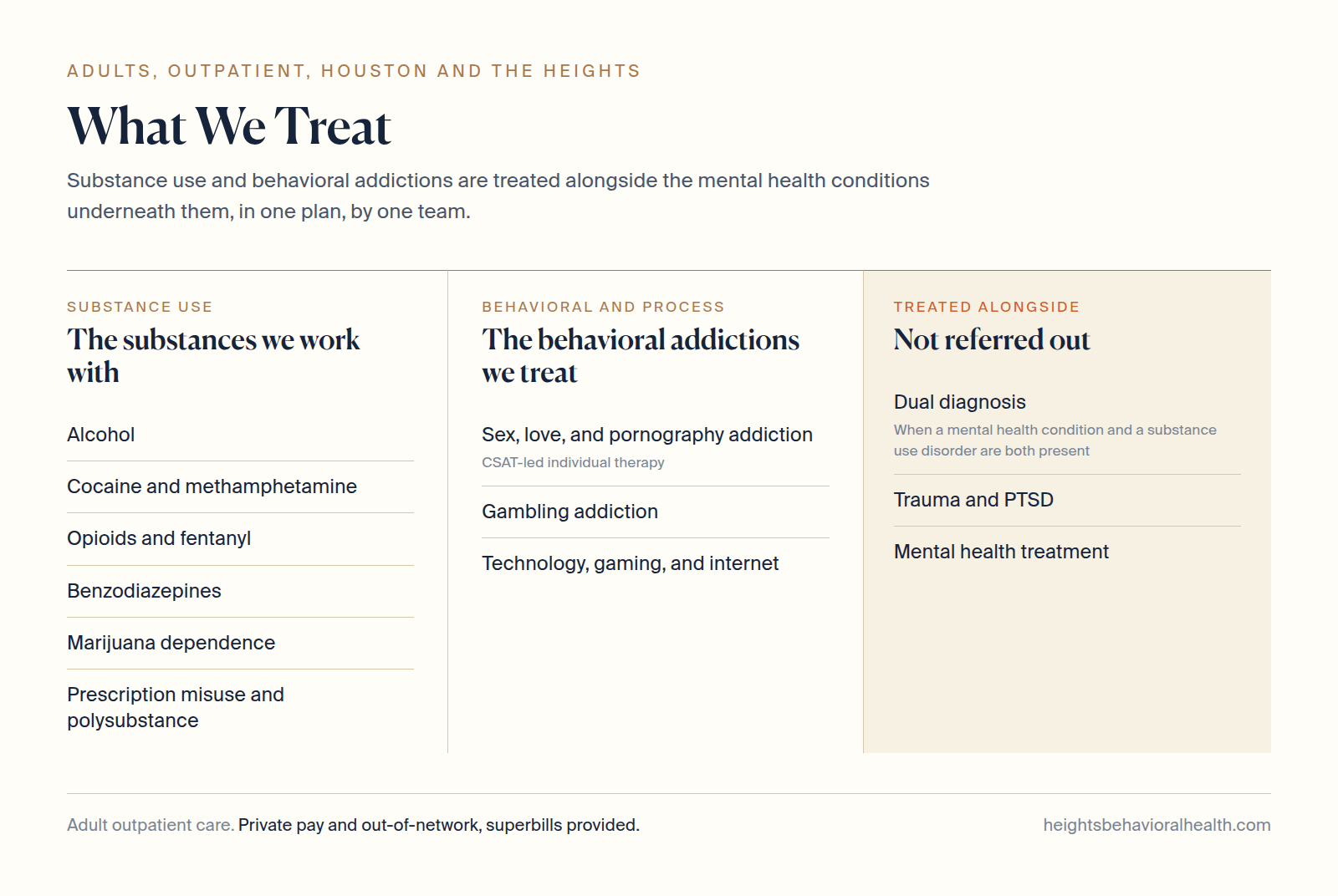
Anxiety, depression, and trauma frequently drive drinking, and drinking makes them worse, which is a cycle that traps a lot of people. Our dual diagnosis care treats both together. If anxiety is the main driver, our guide to anxiety and alcohol goes deeper.
When Does Alcohol Withdrawal Require Medical Care First?
Active withdrawal, significant medical risk, or an acute psychiatric crisis needs a higher level of care first, and we will say so and help you find it. For non-clinical support, our sister practice Heights Mentoring may be a fit.
Heights Behavioral Health is a private-pay, out-of-network provider, and we are clear about pricing before you commit to anything. See how cost and out-of-network benefits work.
If this is an emergency or you are thinking about harming yourself, call 911, or call or text 988 to reach the Suicide and Crisis Lifeline. In Harris County, The Harris Center operates a 24-hour crisis line at 713-970-7000. Heights Behavioral Health is an outpatient program and is not a 24-hour crisis service.
When drinking travels with a mood or trauma condition, treating both together is what works; see our guides to bipolar disorder and alcohol and PTSD and alcohol.
Frequently Asked Questions
Can alcohol use disorder be treated without rehab or inpatient stay?
Many people with mild to moderate AUD do well in outpatient care while living at home. Severe dependence may need medical detox first, and sometimes a higher level of care, which we help arrange.
Is it dangerous to stop drinking on my own?
It can be. Alcohol withdrawal can be medically serious or life threatening for people who are physically dependent. Talk to a medical professional before stopping abruptly, and we can help assess whether supervised detox is needed.
Do you take insurance?
We are private pay and out of network, so we are not contracted with insurance plans. We explain pricing for the recommended level of care before you commit to anything, including if that plan starts at a higher intensity and steps down. Superbills are available if your plan has out-of-network benefits.
Do I have to commit to total abstinence?
Goals are set with you. For many people with AUD, abstinence is the safest and most stable path, and we are honest about that. The treatment plan is built around your situation and history.
How long does outpatient treatment last?
It varies by person. Many people start at a higher intensity and step down as they stabilize, with the plan reviewed regularly rather than fixed for everyone.
Treating Alcohol Use Disorder, Built Around You
Outpatient treatment lets you recover while keeping your life. One confidential call will help you find the right starting point.
Sources
Written and Reviewed by Licensed Clinicians
Joni Ogle is a Licensed Clinical Social Worker (LCSW) and Certified Sex Addiction Therapist (CSAT) with over 37 years of clinical experience in mental health and addiction recovery, dual diagnosis treatment, behavioral addictions, and family intervention. She is the founder of Heights Behavioral Health and Heights Mentoring in Houston, Texas, where she leads a team of licensed clinicians.
Texas LCSW #37376 · Verify license
Deborah Darnell-Drake, LCSW-S, ACSW, LMFT is the Chief Clinical Officer at Heights Behavioral Health and a clinical reviewer. With more than five decades of experience in mental health and substance use disorder treatment, Deborah specializes in addiction, co-occurring mental health conditions, family dynamics, and behavioral addictions including gambling and technology addiction.
Texas LCSW-S #14508 · LMFT #1125 · Verify license
Start a Confidential Conversation
One confidential message connects you with our admissions team and a clear next step. Prefer to talk now? Call (877) 549-5102.