




Key Takeaways
- Pressure, ultimatums, and surprise confrontations usually push a person who drinks too much further away. Steady concern, specific examples, and a clear next step bring them closer.
- Choose a calm, private, sober moment. Use “I” statements, describe what you have seen, and avoid labels like alcoholic in the conversation itself, even if that is the word you searched for.
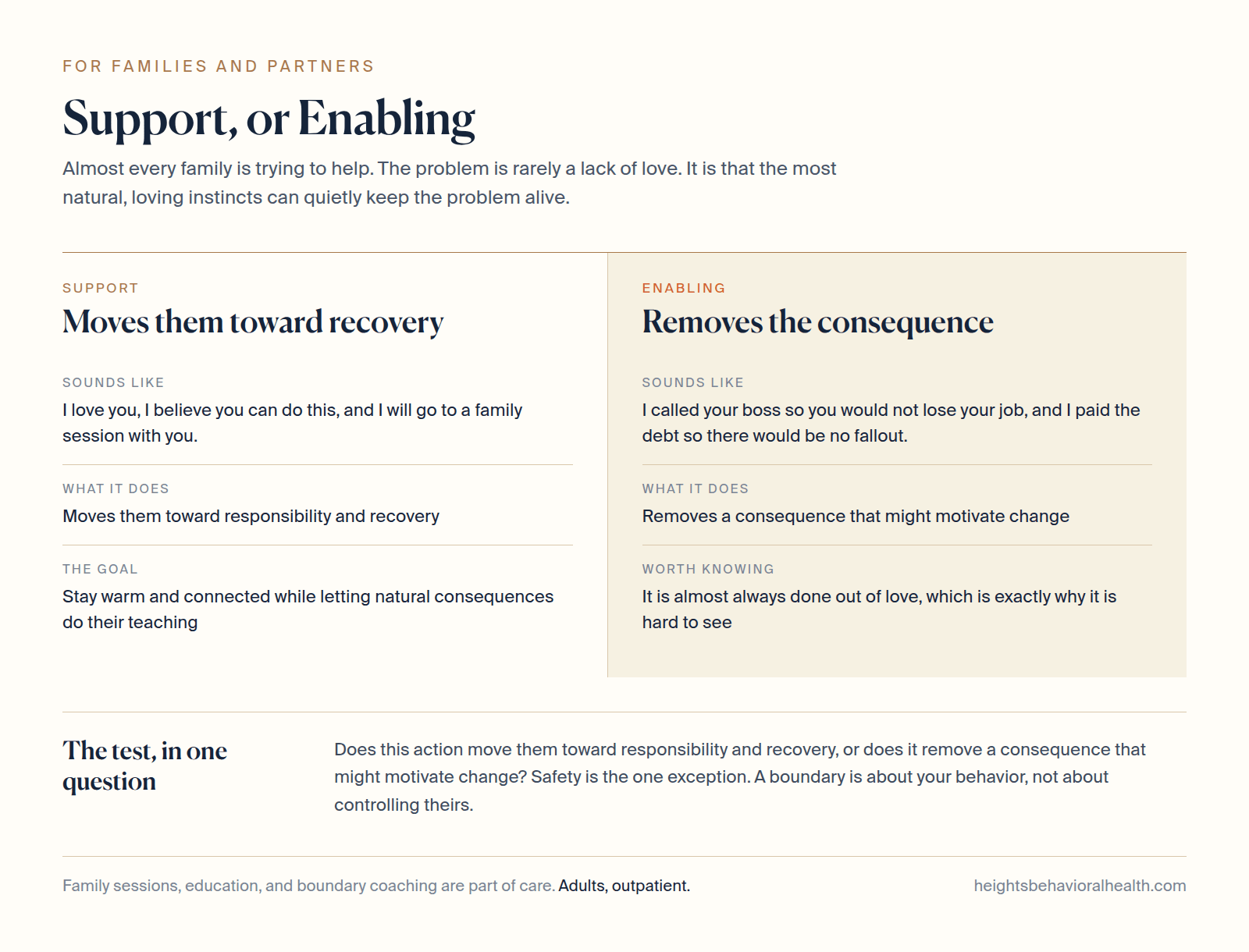
- Helping is not the same as rescuing. Covering for missed work, paying debts, or smoothing over consequences protects the drinking, not the person.
- You cannot force readiness, but you can keep the door open, hold boundaries, and get support for yourself through family programming or Al-Anon.
- Treatment does not have to mean leaving home. Outpatient alcohol care in Houston ranges from weekly therapy to structured day or evening programs.
How do you help an alcoholic without pushing them away? Most families search for exactly that phrase, and it names the real tension: the harder you push, the further someone with a drinking problem tends to retreat. What works is steadier and less dramatic: good timing, specific concern instead of blame, help that does not shield them from consequences, and a clear next step ready when they are willing. At Heights Behavioral Health in Houston, our family support for addiction in Houston helps loved ones prepare for these conversations and stay well themselves, whether or not the person is ready for treatment yet.
If you are reading this, you have probably rehearsed this conversation a hundred times in your head and put it off just as many. That is normal. There is no perfect script, but there are approaches that make it far more likely to land, and others that almost guarantee defensiveness. One note on language: clinicians say alcohol use disorder rather than alcoholic, because the person is more than the drinking, and that framing tends to keep the door open.
Why Pushing Harder Backfires
When someone is drinking in a way that worries you, the instinct is to escalate: more arguments, more monitoring, more ultimatums. It rarely works, for a few reasons. Shame is already doing most of the talking inside the person, so added pressure confirms what they fear and makes hiding easier than honesty. Control invites counter-control, and secret drinking is the usual result. And when every conversation is a confrontation, the relationship stops being a reason to change and becomes another thing to escape. Helping an alcoholic without pushing them away means lowering the temperature while raising the clarity.
What Helping Actually Looks Like
- Stay connected. Keep doing ordinary things together that have nothing to do with drinking. Connection is leverage that lectures never are.
- Be specific and brief. One clear example of what you saw and how it affected you lands better than a catalog of every incident.
- Offer a next step, not a verdict. “Would you be willing to talk with someone, and I will call with you” is easier to say yes to than “You need rehab.”
- Let consequences stand. Do not call in sick for them, pay off what drinking cost, or smooth things over with others.
- Learn what help looks like. Treatment does not have to mean leaving home. Outpatient alcohol rehab in Houston ranges from weekly therapy to structured day and evening programs.
- Get support for yourself. Family programming and Al-Anon help you stay steady, which is what makes the rest of this list possible.
How Should You Prepare Before You Talk?
- Pick a calm, private moment when they are sober and not in crisis
- Lead with love and concern, not accusation or ultimatum
- Get specific: name what you have seen and how it affects you
- Have a concrete next step ready, such as a phone number or an offer to call together
- Prepare for defensiveness, and decide in advance not to match anger with anger
What Should You Say, and What Should You Avoid?
How you frame it matters enormously. A few principles help:
- Use “I” statements: “I am worried about you,” not “You always…”
- Describe specific behaviors and their impact, not character judgments
- Avoid labels like “addict” or “alcoholic” that invite a wall to go up
- Listen as much as you talk, and let them feel heard
- Do not lecture, threaten, or try to win the argument
What Should You Not Do?
Some well-meaning approaches backfire. Try to avoid talking to them when they are intoxicated or in the middle of a crisis, piling on with multiple people in a way that feels like an ambush, making promises or threats you will not keep, or expecting one conversation to fix everything. Change is usually a process, and your first talk is a beginning, not a finish line.
For Families and Loved Ones
Not sure how to start the conversation?
One confidential call with our Houston team can help you prepare and give you a clear next step to offer.
How Do You Help Without Enabling?
There is a real difference between supporting recovery and shielding someone from consequences. Learning that line is one of the most powerful things a family can do, and it is covered in depth in our guide to codependency and family roles. Once your loved one is in treatment, our guide to supporting a loved one covers the next chapter.
Taking Care of Yourself
Living alongside someone else’s drinking is exhausting, and families often put their own needs last for years. Your steadiness is the most useful thing you bring to this, and it needs tending. Our family program includes education, family therapy, and evening open family meetings for loved ones, whether or not the person who drinks has entered treatment. Many families also find Al-Anon or family therapy helpful, and our guide to setting boundaries with a loved one covers the practical side.
What If They Are Not Ready?
Sometimes the answer is no, at least for now, and you cannot force readiness. You can keep the door open, keep your boundaries, and get support for yourself. If clinical treatment is not the right starting point, our sister practice Heights Mentoring offers non-clinical, mentoring-style support. When they are ready, our clinical programs and flagship Individualized Intensive Programming are here.
Heights Behavioral Health is a private-pay, out-of-network provider, and we are clear about pricing before you commit to anything. See how cost and out-of-network benefits work.
If this is an emergency or you are thinking about harming yourself, call 911, or call or text 988 to reach the Suicide and Crisis Lifeline. In Harris County, The Harris Center operates a 24-hour crisis line at 713-970-7000. Heights Behavioral Health is an outpatient program and is not a 24-hour crisis service.
Frequently Asked Questions
How do I help an alcoholic who does not want help?
Stay connected, keep conversations calm and specific, stop shielding them from consequences, and keep a next step ready for the moment they are willing. Get support for yourself in the meantime. Readiness often comes in a window, and families who are prepared can act when it opens.
Should I stop drinking around them?
It helps. Keeping alcohol out of shared spaces and not drinking in front of them removes a trigger and shows you take the problem seriously, without turning it into a standoff.
Can I make someone go to treatment?
In Texas, adults generally cannot be forced into treatment outside of narrow legal circumstances. What families can do is make treatment easier to say yes to and harder to avoid. Our guide to whether you can force someone into rehab in Texas explains the options.
When is the best time to bring it up?
Choose a calm, private moment when they are sober and not in crisis. Avoid raising it during an argument or while they are intoxicated, when defensiveness is almost guaranteed.
Should I do a formal intervention?
Sometimes, but ambush-style interventions can backfire. A calm, caring, well-prepared conversation often works better. We can help you decide on the right approach and prepare for it.
Do you take insurance?
We are private pay and out of network, and not contracted with insurance plans. If you are gathering information before raising this with someone, having the actual cost in hand makes the conversation easier, so we give it to you upfront. Superbills are available for plans with out-of-network benefits.
What if they get angry or deny everything?
Expect some defensiveness and decide in advance not to escalate. Stay calm, lead with love, plant the seed, and keep the door open. One conversation rarely fixes everything.
What if they refuse help?
You cannot force readiness, but you can hold boundaries, keep the door open, and get support for yourself. Non-clinical mentoring support may be a fit until they are ready for treatment.
The Conversation That Opens a Door
With the right approach, a hard talk can become the start of recovery. One confidential call can help you prepare.
Sources
Written and Reviewed by Licensed Clinicians
Joni Ogle is a Licensed Clinical Social Worker (LCSW) and Certified Sex Addiction Therapist (CSAT) with over 37 years of clinical experience in mental health and addiction recovery, dual diagnosis treatment, behavioral addictions, and family intervention. She is the founder of Heights Behavioral Health and Heights Mentoring in Houston, Texas, where she leads a team of licensed clinicians.
Texas LCSW #37376 · Verify license
Deborah Darnell-Drake, LCSW-S, ACSW, LMFT is the Chief Clinical Officer at Heights Behavioral Health and a clinical reviewer. With more than five decades of experience in mental health and substance use disorder treatment, Deborah specializes in addiction, co-occurring mental health conditions, family dynamics, and behavioral addictions including gambling and technology addiction.
Texas LCSW-S #14508 · LMFT #1125 · Verify license
Start a Confidential Conversation
One confidential message connects you with our admissions team and a clear next step. Prefer to talk now? Call (877) 549-5102.