




Key Takeaways
- Medication-assisted treatment is one of the most evidence-supported interventions in addiction medicine, yet strongly held myths about it can cost people their lives.
- Physical dependence on a prescribed, monitored medication is not addiction, and someone taking medication as directed, doing therapy, and rebuilding a life is in recovery.
- Medication reduces craving and, for opioids, dramatically reduces overdose risk, but it does not address what the substance was doing for you, which is why MAT works best inside real treatment.
- Buprenorphine is offered for opioid use disorder and naltrexone for opioid or alcohol use disorder, while methadone and on-site medical detox are not provided and are coordinated by referral.
- How long to stay on medication is decided with your prescriber based on stability rather than a calendar, and staying on it indefinitely is a legitimate outcome, not a failure.
Medication-assisted treatment is one of the most evidence-supported interventions in addiction medicine and one of the most argued about. People arrive with strong opinions absorbed from family, from a treatment program years ago, or from a recovery community that took a hard line. Some of those opinions are wrong in ways that cost people their lives. For how medication fits into a full treatment plan, see our opioid addiction treatment in Houston page.
Here is what MAT does, what it does not do, and what we offer, stated plainly.
Myth: MAT Is Just Trading One Addiction for Another
This is the objection we hear most, and it confuses physical dependence with addiction. Addiction is compulsive use despite harm, loss of control, and a life narrowing around a substance. A person stable on buprenorphine is not chasing anything, not losing time, and not organizing their day around getting more. Physical dependence on a prescribed, monitored medication is closer to the way someone with a thyroid condition depends on levothyroxine.
Myth: You Are Not Really Sober on MAT
This belief is common in some recovery communities and it keeps people from treatment that would help them. There is no clinical basis for it. Someone taking a prescribed medication as directed, doing therapy, and rebuilding a life is in recovery. If your support community disagrees, that is worth talking about openly rather than quietly discontinuing a medication that is working.
Myth: MAT Means You Skip the Therapy
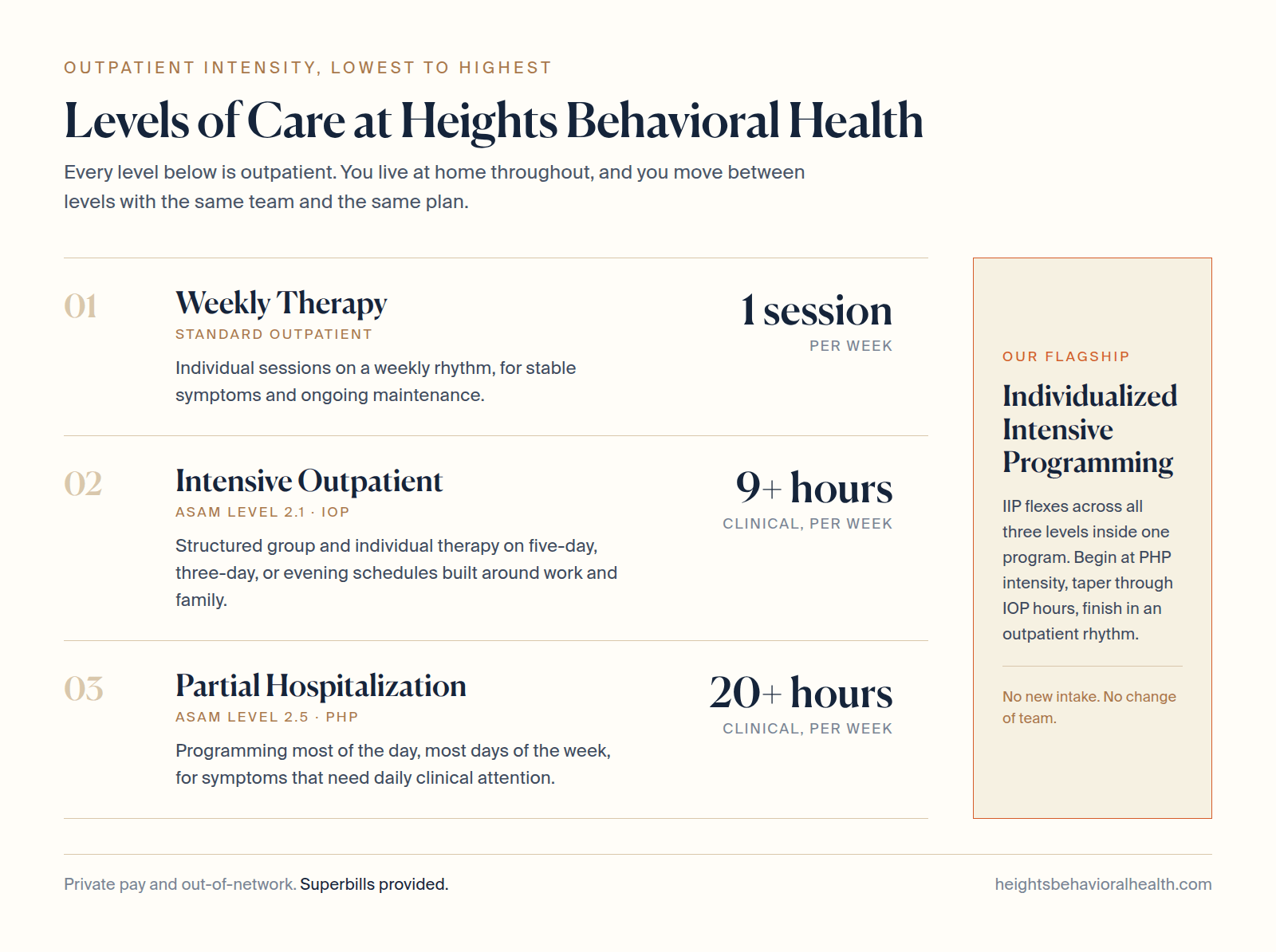
Medication reduces craving and, for opioids, dramatically reduces overdose risk. It does not address what the substance was doing for you, what the years of use cost, or the patterns that will still be there when the craving quiets. MAT works best inside real treatment, which is exactly how we use it. See our Individualized Intensive Program.
What We Actually Offer
- Buprenorphine for opioid use disorder, which reduces craving and withdrawal and lowers overdose risk
- Naltrexone for opioid or alcohol use disorder, which blocks the reinforcing effect rather than substituting for the substance
- Coordination with your prescriber, and medication decisions made clinically rather than on request
We do not provide methadone, and we do not provide medical detox on site. When supervised withdrawal has to come first, we assess for it and coordinate the referral, then continue your care afterward.
Confidential Next Step
Wondering whether medication would help you?
A confidential assessment will give you a straight answer either way.
Fact: For Opioids, This Is a Survival Question
Buprenorphine and methadone are associated with substantial reductions in mortality for opioid use disorder. In an era of fentanyl contamination, where a single counterfeit pill can be fatal, that matters more than any philosophical position about medication. Our fentanyl article covers the risk landscape, and our opioid treatment article covers the clinical picture.
Fact: Naltrexone Is Underused for Alcohol
Most people with alcohol use disorder are never offered medication at all. Naltrexone reduces cravings and blunts the reinforcing effect of drinking, which for the right person removes enough of the pull to make the rest of the work possible. It is not a cure and it does not work for everyone. It is worth asking about. See our alcohol use disorder article.
How Long Do People Stay on It?
There is no fixed answer, and pressure to taper quickly is a common way good outcomes get undone. The decision belongs to you and your prescriber, based on stability rather than a calendar. Some people taper after a year or two. Some stay on it indefinitely, and that is a legitimate outcome, not a failure.
If this is an emergency or you are thinking about harming yourself, call 911, or call or text 988 to reach the Suicide and Crisis Lifeline. In Harris County, The Harris Center operates a 24-hour crisis line at 713-970-7000. Heights Behavioral Health is an outpatient program and is not a 24-hour crisis service.
Frequently Asked Questions
Is MAT just replacing one drug with another?
No. Addiction is compulsive use despite harm and loss of control. A person stable on a prescribed, monitored medication is not experiencing either. Physical dependence and addiction are different things.
Do you offer methadone?
No. We offer buprenorphine and naltrexone. We do not provide methadone and do not provide medical detox on site, though we coordinate referrals when either is needed.
Do you take insurance?
We are private pay and out of network, and not in network with any plan. We explain what an assessment and the recommended level of care cost before you commit to anything, including any psychiatric coordination. Superbills are available if your plan has out-of-network benefits.
Can I do MAT without therapy?
We do not offer it that way. Medication reduces craving and risk; it does not address what drove the use. The two together produce better outcomes than either alone.
Does naltrexone help with alcohol as well as opioids?
Yes. Naltrexone is approved for both. For alcohol it reduces craving and blunts the reinforcing effect of drinking. It is significantly underused.
How long will I need to be on medication?
There is no set duration. It is a clinical decision made with your prescriber based on stability. Staying on medication long term is a legitimate outcome, not a failure.
Get a Straight Answer About Medication
A confidential assessment covering whether MAT fits, what we offer, and what we do not.
Sources
Written and Reviewed by Licensed Clinicians
Joni Ogle is a Licensed Clinical Social Worker (LCSW) and Certified Sex Addiction Therapist (CSAT) with over 37 years of clinical experience in mental health and addiction recovery, dual diagnosis treatment, behavioral addictions, and family intervention. She is the founder of Heights Behavioral Health and Heights Mentoring in Houston, Texas, where she leads a team of licensed clinicians.
Texas LCSW #37376 · Verify license
Deborah Darnell-Drake, LCSW-S, ACSW, LMFT is the Chief Clinical Officer at Heights Behavioral Health and a clinical reviewer. With more than five decades of experience in mental health and substance use disorder treatment, Deborah specializes in addiction, co-occurring mental health conditions, family dynamics, and behavioral addictions including gambling and technology addiction.
Texas LCSW-S #14508 · LMFT #1125 · Verify license
Start a Confidential Conversation
One confidential message connects you with our admissions team and a clear next step. Prefer to talk now? Call (877) 549-5102.