




Key Takeaways
- Continuing care is the structured support that bridges leaving a residential or hospital program and living independently, protecting gains made in a protected setting once real life returns.
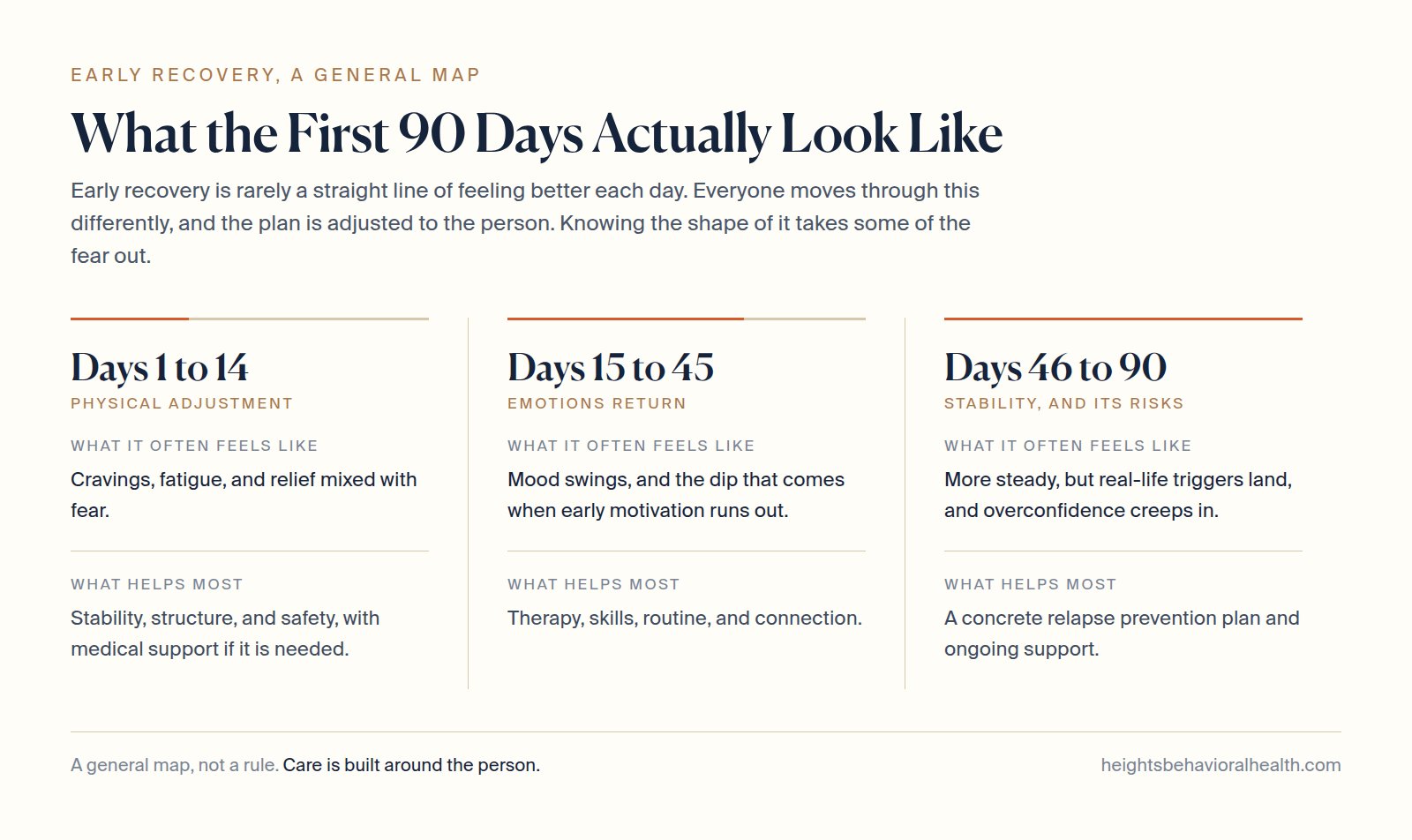
- The months after discharge are the highest-risk window, because structure drops suddenly, old triggers return, confidence can outpace skills, and isolation can quietly creep in.
- A strong plan includes a step-down level of care such as IOP, a relapse prevention plan written before high-risk moments happen, and ongoing treatment for co-occurring anxiety, depression, or trauma.
- Family and a few trusted people stay part of the plan, and intensity tapers on a schedule that fits progress rather than a fixed calendar.
- Families, interventionists, and discharge planners often coordinate the step-down before residential ends, and planning early helps keep momentum from being lost in the handoff.
Step down care is the planned move from residential or inpatient treatment to a less intensive level of care, such as a partial hospitalization program, an intensive outpatient program, and then weekly therapy. It bridges the gap between a protected treatment setting and everyday life, which is the highest-risk window in recovery. At Heights Behavioral Health, we coordinate step down care in Houston with residential teams, families, and referring professionals so the progress made in residential carries forward.
People reach this page two ways. Either you or a loved one is about to leave residential treatment and you are planning the next step, or discharge already happened and the drop in structure feels risky. Both come down to one question: how do you keep the progress from residential from slipping away?
After more than 37 years of clinical work, most of it here in Houston, here is my honest answer. The work done in residential is real, but it happens in a protected setting. The test is what happens when real life returns. Continuing care is the difference between a recovery that survives contact with daily life and one that does not. This guide explains what it is, why the post-discharge window matters, and what a strong plan includes.
Why Are the Months After Discharge the Riskiest?
- Structure drops suddenly. Residential provides round-the-clock support; home does not. That gap is where relapse often happens.
- Triggers return. The people, places, and stresses that fed the problem are still there, now without the residential container.
- Confidence can outpace skills. Feeling better is not the same as having tested recovery in the real world.
- Isolation creeps in. Without a plan, the new daily routine can quietly shed the supports that were keeping recovery steady.
What Does Step Down Care Look Like?
Step down care usually follows a gradual path, adjusted to how each person is doing:
- Residential or inpatient care. Round-the-clock support in a treatment setting.
- Partial hospitalization (PHP). Full-day structure on most weekdays while you return home each evening.
- Intensive outpatient (IOP). Several days a week of therapy, including evening options, as work and family life resume.
- Weekly therapy and aftercare. Ongoing individual or group therapy, recovery support, and a written plan for high-risk moments.
Not everyone needs every step. A clinical assessment decides where to begin, and the plan moves at the pace of progress rather than a fixed calendar.
What Does a Strong Continuing Care Plan Include?
- A step-down level of care. Moving into IOP or our flagship Individualized Intensive Programming keeps clinical support in place while independence grows.
- A relapse-prevention plan. Concrete responses to high-risk moments, written before they happen.
- Ongoing care for co-occurring conditions. Anxiety, depression, or trauma do not end at discharge, and continuing care keeps treating them.
- Family and accountability. The household and a few trusted people stay part of the plan.
- A realistic taper. Intensity steps down on a schedule that fits progress, not a fixed calendar.
Confidential Next Step
Planning a step-down from residential?
We design continuing care that preserves the personalized attention of residential treatment. One confidential call can map the next step.
How Do We Approach Continuing Care?
Our model is built to preserve the individualized experience clients receive in premier residential programs while helping them reintegrate into everyday life. That means a plan shaped around the person, not a fixed step-down curriculum, with co-occurring conditions treated alongside substance use. For families and referring providers, the goal is continuity, so the momentum from residential is not lost in the handoff.
What About Families and Referring Providers?
Interventionists, discharge planners, and families often coordinate the step-down before residential ends. We are glad to be part of that planning early. When the next need is non-clinical support rather than treatment, our sister practice Heights Mentoring offers mentoring and accountability that can complement clinical care.
Heights Behavioral Health is a private-pay, out-of-network provider, and we are clear about pricing before you commit to anything. See how cost and out-of-network benefits work.
If this is an emergency or you are thinking about harming yourself, call 911, or call or text 988 to reach the Suicide and Crisis Lifeline. In Harris County, The Harris Center operates a 24-hour crisis line at 713-970-7000. Heights Behavioral Health is an outpatient program and is not a 24-hour crisis service.
An Aftercare Planning Checklist
- A confirmed start date for the next level of care, ideally scheduled before discharge
- Records and the discharge summary shared, with consent, with the outpatient team
- A relapse prevention plan for the first weekends, holidays, and stressful workdays
- Medication continuity, including who will prescribe and when
- Family or trusted people who know the plan and their role in it
- A plan for work or school, including any leave or schedule changes
For Referring Professionals
Referring a client from residential care?
We coordinate step-down with your team, carry the discharge plan forward, and share updates within your client’s consent.
Frequently Asked Questions
What is step down care?
Step down care is the planned move from residential or inpatient treatment to a less intensive level of care, such as PHP or IOP, so support continues as you return to daily life.
What comes after residential treatment?
Usually a step-down level of care such as partial hospitalization or intensive outpatient treatment, followed by weekly therapy and an aftercare plan. The right starting point depends on how you are doing at discharge.
What is continuing care in recovery?
Continuing care is the structured support that follows a higher level of treatment, such as residential, to protect early recovery. It often includes a step-down to outpatient programming, a relapse-prevention plan, and ongoing care for co-occurring conditions.
Why is the period after residential so high-risk?
Structure drops sharply at discharge while real-world triggers return. Without a plan, that gap is where many relapses occur. Continuing care fills the gap.
Do you take insurance for continuing care?
We are private pay and out of network, and not in network with any plan. Continuing care after residential treatment is quoted before it starts, so nothing about the handoff is a surprise. If your plan has out-of-network benefits, we provide a superbill you can submit.
What level of care comes after residential?
Many people step down into PHP or IOP, or into a personalized plan, then taper further as they stabilize. The right step depends on a clinical assessment.
Can you coordinate with my residential program?
Yes. With proper authorization, we coordinate with residential teams, interventionists, and families to plan a smooth step-down before discharge.
Hold the Gains You Worked For
If you are planning life after residential, one confidential call will help you build a continuing care plan that protects your progress.
Sources
- National Institute on Drug Abuse (NIDA). Treatment and Recovery; Continuing Care. nida.nih.gov
- Substance Abuse and Mental Health Services Administration (SAMHSA). Recovery and Continuing Care. samhsa.gov
- McKay, J. Continuing Care Research, Journal of Substance Abuse Treatment. (peer-reviewed)
Written and Reviewed by Licensed Clinicians
Joni Ogle is a Licensed Clinical Social Worker (LCSW) and Certified Sex Addiction Therapist (CSAT) with over 37 years of clinical experience in mental health and addiction recovery, dual diagnosis treatment, behavioral addictions, and family intervention. She is the founder of Heights Behavioral Health and Heights Mentoring in Houston, Texas, where she leads a team of licensed clinicians.
Texas LCSW #37376 · Verify license
Deborah Darnell-Drake, LCSW-S, ACSW, LMFT is the Chief Clinical Officer at Heights Behavioral Health and a clinical reviewer. With more than five decades of experience in mental health and substance use disorder treatment, Deborah specializes in addiction, co-occurring mental health conditions, family dynamics, and behavioral addictions including gambling and technology addiction.
Texas LCSW-S #14508 · LMFT #1125 · Verify license
Start a Confidential Conversation
One confidential message connects you with our admissions team and a clear next step. Prefer to talk now? Call (877) 549-5102.