


Relapse prevention is the set of skills, supports, and plans that help you stay in recovery after treatment, from substance use or a behavioral addiction. Relapse is not a moral failure or proof that treatment failed. It is a process with warning signs, and a good plan helps you catch it early. At Heights Behavioral Health in Houston, relapse prevention is built into every level of care and continues through our step-down and aftercare support.
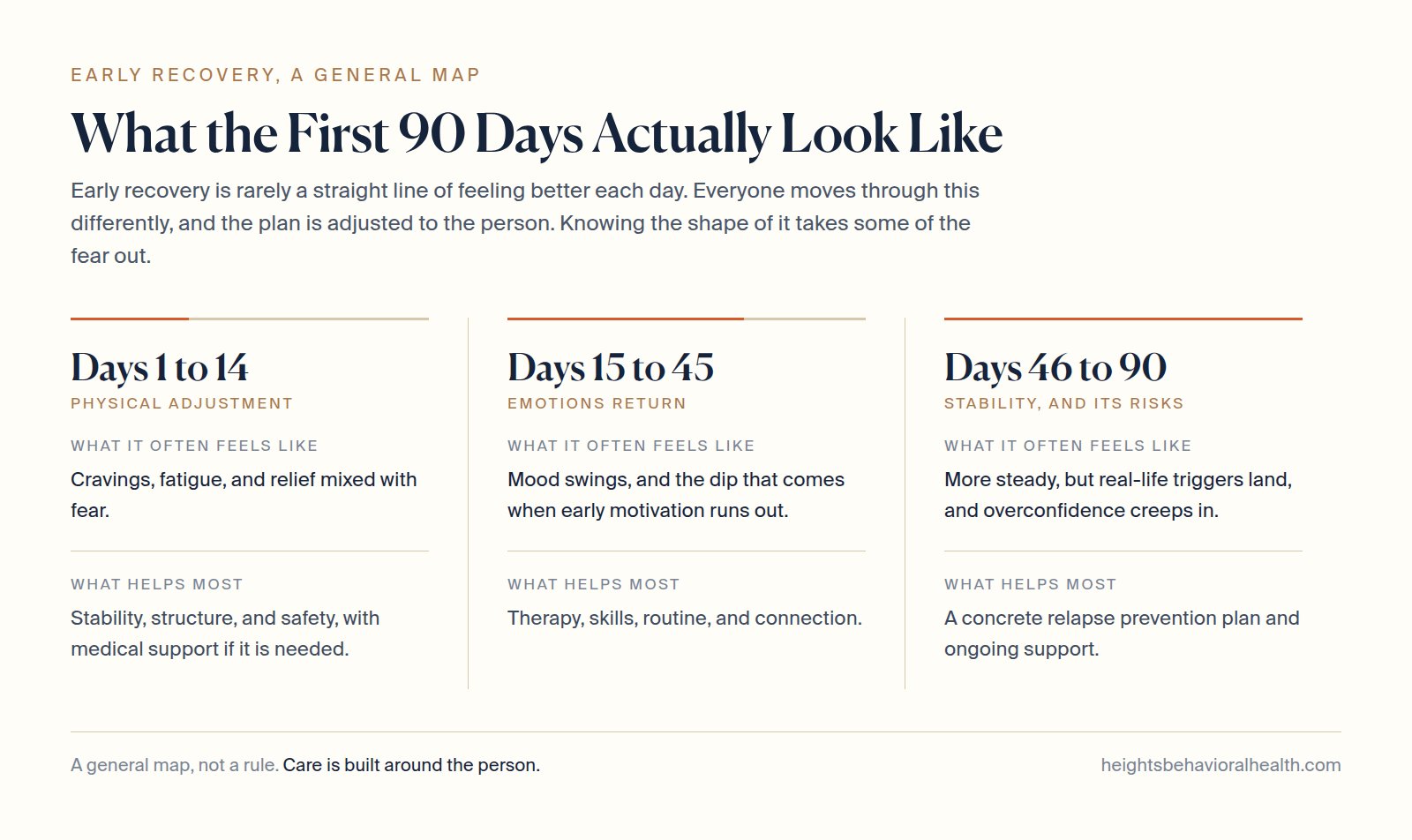
Recovery is not just stopping a behavior. It is building a life where the behavior is no longer needed. The first weeks can feel powered by motivation and relief, but lasting recovery comes from a concrete plan for the ordinary days, the stressful ones, and the moments when the old urge returns.
Is Relapse a Process or a Single Moment?
Long before a person picks up a drink or returns to a behavior, there are usually warning signs. Researchers often describe three stages:
- Emotional relapse: bottling up feelings, isolating, skipping support, poor sleep and self-care
- Mental relapse: romanticizing past use, bargaining, planning, secrecy
- Physical relapse: returning to the substance or behavior
The earlier you catch the process, the easier it is to change course. That is the whole point of a relapse prevention plan: to make the early signs visible while there is still plenty of room to act.
What Does a Strong Relapse Prevention Plan Include?
- Knowing your specific triggers, the people, places, feelings, and times of day
- Concrete coping skills for cravings, drawn from CBT, DBT, and mindfulness
- A clear support network and a short list of who to call
- Daily structure that protects sleep, movement, and connection
- A written plan for high-risk situations, made before you are in one
- A response plan for a slip, so one moment does not become a full relapse
How Do We Build Relapse Prevention?
Relapse prevention is woven through our Houston programming, not bolted on at the end. Our adult groups include a dedicated Relapse Prevention group, Addiction Education, Shame Resilience, and skills groups in CBT, DBT, and Motivational Interviewing, alongside Mindfulness and Guided Meditation that train the pause between an urge and an action. Where trauma or mental health conditions are part of the picture, we treat those too, because untreated triggers are a common path back.
Worried about staying on track after treatment?
One confidential call with our Houston team can help you build a plan that fits your real life.
Why Is Continuing Care Where Recovery Holds?
The transition out of structured treatment is one of the highest-risk windows in recovery, which is why step-down care matters so much. Our approach to continuing care keeps support in place as you take on more of daily life, and our PHP and IOP levels of care let you step down gradually rather than all at once.
What If a Slip Happens?
A return to use does not erase your progress, and shame is one of the biggest barriers to getting back on track. The right response is to reach out quickly, learn what the slip revealed, and adjust the plan. We treat it as information, not as failure.
Heights Behavioral Health is a private-pay, out-of-network provider, and we are clear about pricing before you commit to anything. See how cost and out-of-network benefits work.
If this is an emergency or you are thinking about harming yourself, call 911, or call or text 988 to reach the Suicide and Crisis Lifeline. In Harris County, The Harris Center operates a 24-hour crisis line at 713-970-7000. Heights Behavioral Health is an outpatient program and is not a 24-hour crisis service.
Frequently Asked Questions
Does a relapse mean treatment failed?
No. Relapse is common in recovery from chronic conditions and is best treated as a signal to adjust the plan, not as proof of failure. What matters most is how quickly you reach back out for support.
What are the most common relapse triggers?
Stress, difficult emotions, isolation, certain people or places, overconfidence, and untreated mental health symptoms are among the most common. Identifying your personal triggers is a core part of the plan.
Do you take insurance?
We are private pay and out of network, and not in network with any plan. Continuing care and relapse prevention are priced and explained before they begin, so support can be planned rather than improvised. If your plan has out-of-network benefits, we provide a superbill to submit.
How long do I need relapse prevention support?
Recovery is ongoing, and support usually steps down gradually rather than stopping abruptly. The right length depends on your situation, and the plan is reviewed over time.
Can you help after I have completed treatment somewhere else?
Yes. Many people come to us for step-down and continuing care, including relapse prevention, after a residential or detox program elsewhere.
A Plan Built to Hold in Real Life
Lasting recovery runs on skills, structure, and support. One confidential call will help you build a relapse prevention plan that fits you.
Sources
Start a Confidential Conversation
One confidential message connects you with our admissions team and a clear next step. Prefer to talk now? Call (877) 549-5102.